

Research Signature Areas
Environmental Impacts on Human Health
Environments play major roles in influencing our health.
College of Health faculty address the health effects of multiple adverse environmental exposures (e.g., noise, air and water pollution, aeroallergens, radon), climate change, and natural disasters. Others focus on the effects of the built environment on health behaviors and outcomes (e.g., asthma, cancer, cardiometabolic risk factors and diseases, food insecurity, mental health).
Collaborating across disciplines and leveraging the university’s diverse strengths, our researchers are developing prevention and resilience solutions and translating evidence-informed policies, programs, and practices to communities.
We focus on health disparities and inequities, with sensitivity to how impacts stem from and are experienced in social environments. These impacts are often more severe for those with fewer resources, particularly in communities of color and marginalized groups and in low-income settings and populations.
We integrate the expertise of faculty from multiple disciplines and fields, including public health, kinesiology, nutrition, and human development and family sciences.
News and stories
Recent environmental impacts on human health news and stories.

Matt Bozigar was invited to present research on noise and radon exposures at the inaugural Bridging Horizons for Planetary Healthspan Symposium in London.
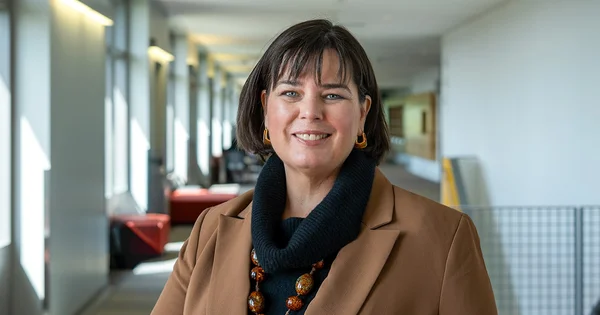
OSU environmental health professor Molly Kile has been appointed to Oregon's new Environmental Restoration Council, helping direct a $698 million Monsanto PCB settlement toward healthier land, water and communities.
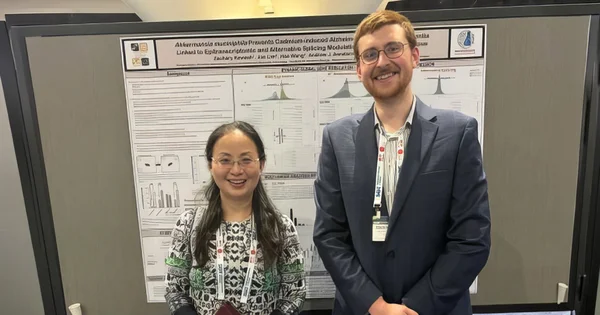
MPH environmental and occupational health student Zach Kowash presented research on cadmium-induced molecular mechanisms linked to Alzheimer’s disease at the Society of Toxicology conference, exemplifying the interdisciplinary strength of the EOH program.

Environmental epidemiologist Matthew Bozigar discusses the impact of geography on health outcomes, the risks of chronic noise exposure, and his research at Oregon State University.

Associate Professor Veronica Irvin discusses her behavioral science research at Oregon State University, including breast cancer screening, environmental health, well water safety, and supporting underserved communities.
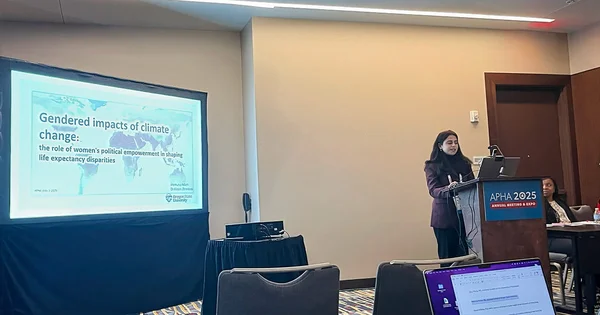
Doctoral student Memuna Aslam presented research on climate-driven health disparities and women’s political empowerment at the 2025 APHA Annual Meeting.
Publications
Recent environmental impacts on human health publications
(This is not an exhaustive list. Visit individual faculty profiles for more extensive lists of their publications.)
2026
Projects, programs and laboratories
Environmental impacts on human health projects, programs and laboratories.
(This is not an exhaustive list. Contact individual faculty for more information of their current and past research.)
 Research laboratory
Environmental Exposure & Health Lab
The Environmental Exposure & Health Lab measures and models how place‑based environmental exposures affect population health. We collaborate with researchers, communities, agencies and companies to monitor risk and improve health.
Principal Investigator
Website
 Research laboratory
Environmental Exposure and Biomarker Laboratory
The Environmental Exposure and Biomarker Laboratory measures metal concentrations in environmental and biological samples in order to determine personal exposure to contaminants. We also examine molecular biomarkers that may be generated by exposure to environmental contaminants. We collaborate closely with other laboratories and programs at Oregon State University and elsewhere.
Director: Molly Kile, ScD
 Research laboratory
Methylmercury Lab
My laboratory is focused on mercury cycling in the environment, and mitigating human methylmercury exposure.
Director: Sarah Rothenberg, D.Env.
Website: Methylmercury Lab
 Research laboratory
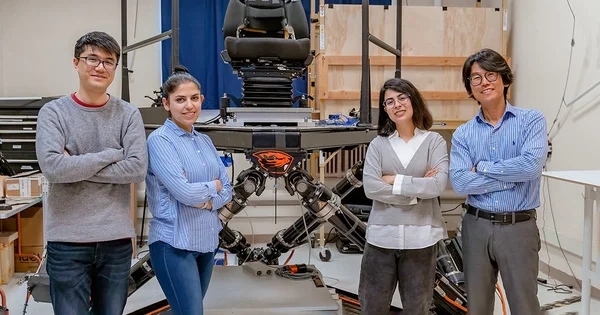
Occupational Ergonomics and Biomechanics Laboratory
We use a variety of bioinstrumentation to characterize work-related physical exposures and investigate their relationships with adverse health outcomes with an ultimate goal of promoting health and well-being at workplaces. We conduct both laboratory and field-based research studies to investigate underlying musculoskeletal injury mechanism in various work environment from computer work to heavy equipment operation.
Director: Jay Kim, PhD, MS
Website: Occupational Ergonomics and Biomechanics Laboratory
 Research laboratory
Occupational Safety and Health Laboratory
The Occupational Safety and Health Laboratory conducts a broad range of research into measuring the factors related to disease and injury. Our goal is to develop and test targeted interventions that create healthy communities and workplaces, and to improve worker safety in high risk industries.
Director: Laurel Kincl, PhD, CSP
 Research laboratory
Spatial Health Laboratory
The Spatial Health Laboratory carries out research related to how place (i.e. where we live, work and play) influences our health. Current projects are examining the health impacts of air pollution, built environments, urban green space, and climate change.
Director: Perry Hystad, PhD
Website: Spatial Health Laboratory