

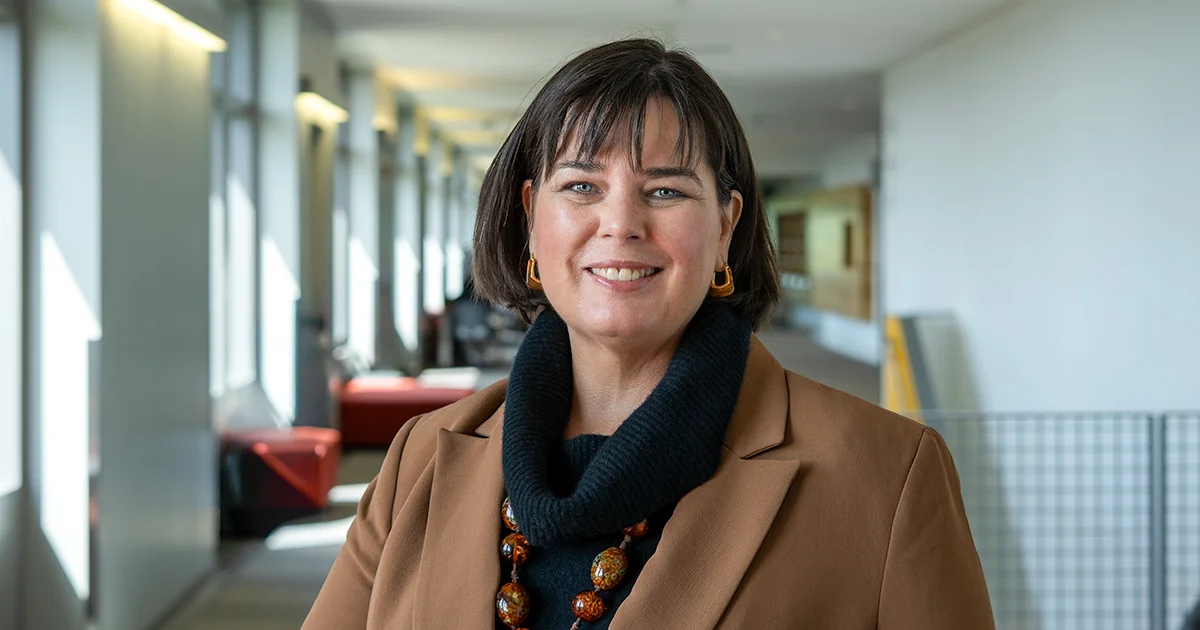
OSU Professor Molly Kile to serve on new Oregon Environmental Restoration Council
College of Health professor appointed to guide Oregon's landmark Monsanto settlement fund
Public Health Professor Molly Kile is part of what’s being called a once-in-a-lifetime investment into Oregon’s environment and its communities.
In October, she was appointed by Oregon Gov. Tina Kotek as a council member of the newly formed Oregon Environmental Restoration Council. The council will guide the 100- year Environmental Restoration Fund, established by Senate Bill 1561 in 2024. The money comes from a $698 million settlement with Monsanto that was reached in 2022 due to the long-term harm caused by the company’s polychlorinated biphenyls (PCBs) to the state’s land, water, fish and wildlife. This is the largest environmental damage recovery in state history.
As part of the 13-member council, Molly will help determine how best to spend those funds in projects and programs that benefit Oregon’s environment and the health of its communities and Tribes. Molly is one of six public members who will serve on the council and one of only two members selected because of expertise in environmental health science.
An environmental epidemiologist in OSU’s College of Health, Molly’s research focuses on understanding how environmental exposures affect human health and sits at the intersection of environmental health, public health, and community-engaged research. She engages in community-based health research and has done extensive work in Bangladesh, Oregon and with Native American Tribes to identify and mitigate harmful chemicals and other pollutants that are found in drinking water and indoor air. She is the co-director of ASPIRE, a children’s environmental health center in OSU’s College of Health and directs the Early Childhood Development Core in the Hallie E. Ford Center for Healthy Children and Families.
“I appreciate this opportunity to improve the health and well-being of Oregonians by mitigating the harm of environmental hazards,” Molly says. “The chance to make such a positive impact is immensely rewarding, and I’m honored to do the work.”
Oregon is not the only state to settle with Monsanto, an agricultural chemical and biotechnology company acquired by Bayer AG in 2018, but its settlement is the largest. Other states include Ohio, Virginia, Pennsylvania and New Jersey.
From the 1930s to just prior to 1979 when PCBs were banned, Monsanto was the sole manufacturer of PCBs in the United States. These chemicals are used in a variety of products, including paint, caulking and electrical equipment and are classified as a probable carcinogen by the Environmental Protection Agency. Despite the ban, PCBs
remain a persistent problem because they do not readily break down in the environment and can build up in fish, wildlife, and people. Removing sources of PCBs, known to harm immune, reproductive and nervous systems in humans and other living things, is seen as the best way to prevent them from harming Oregon’s people, fish and wildlife.
The Council is working to establish the guiding principles for this endowment to ensure that the funds will be directed to Oregon’s nine federally recognized Tribal Nations to support natural resource stewardship, state agency projects connected to the settlement’s environmental goals, and to a Community Impact Fund for projects that directly benefit communities harmed by PCBs and other toxins. In this way, the settlement is not only addressing past contamination, but also investing in prevention, restoration and community resilience so future generations inherit cleaner waters, healthier ecosystems and safer places to live.
Learn more on the fund’s website, as well as in The Oregonian.
Related stories
OSU environmental health professor Molly Kile has been appointed to Oregon's new Environmental Restoration Council, helping direct a $698 million Monsanto PCB settlement toward healthier land, water and communities.

Pollutants in drinking water often can't be identified by sight or smell alone. OSU College of Public Health experts share how to test for contaminants like arsenic, nitrate, and lead through the university's Well Water Program.

OSU study finds pregnant women living within 1 km of oil and gas drilling sites in Texas are 5% more likely to develop hypertension during pregnancy.