

Research Signature Areas
Health Promotion and Disease Prevention
We believe that health is a human right, essential to the ability of individuals to function and flourish in society.
Cancer, heart disease, diabetes, dementia, mental health, and substance use disorders are leading causes of death and disability in the United States.
As populations age, acute and chronic diseases create social, medical, and economic burdens.
In addition, racial and ethnic minoritized groups are at disproportionate risk of experiencing negative health outcomes from preventable and treatable conditions.
College of Health faculty expertise contributes to all three levels of disease prevention.
Many focus on primary prevention to avoid the occurrence of disease or injury.
Faculty address the impact of social and economic determinants of health (e.g., work-family policies, health care reforms, behavioral and mental health services, school physical education policies) and promote healthy and safe behaviors (e.g., nutritious eating, physical activity, cancer screenings, smoking and substance use cessation, vaccine uptake).
Others focus on secondary and tertiary prevention to reduce the progression and effects of disease and injury and to manage health problems and injuries (e.g., osteoporosis, fall prevention, cognitive decline and dementia, cardiovascular diseases, diabetes).
Faculty are uniquely positioned to integrate environmental and biological information with social, policy, and behavioral data to promote health, prevent disease, and improve quality of life and life expectancy.
News and stories
Recent health promotion and disease prevention news and stories.

Brian Primack served as senior author on a study documenting vaping devices shaped like sippy cups being marketed to young children on Instagram, published in the American Journal of Preventive Medicine.

David Rothwell has received a competitive Russell Sage Foundation grant to study how paid family leave policies affect mothers' employment and use of public assistance in Oregon.

OSU's Center for Healthy Aging Research connects 40+ faculty across eight colleges to advance interdisciplinary science — from lab bench to clinical practice — helping people age healthier at every stage of life.

Mammograms save lives — but they don't catch everything. OSU College of Health researcher Veronica Irvin and Samaritan Health Services studied interval breast cancers to find out why self-exams still play a critical role in early detection.

John Schuna, associate professor of kinesiology, was quoted in a Washington Post article on walking pace and healthy aging.

College of Health faculty and doctoral students presented and earned recognition for research on social media and mental health at a global public health conference.
Recent publications
Recent health promotion and disease prevention publications
(This is not an exhaustive list. Visit individual faculty profiles for more extensive lists of their publications.)
2026
Projects, programs and laboratories
Health promotion and disease prevention projects, programs and laboratories.
(This is not an exhaustive list. Contact individual faculty for more information of their current and past research.)
 Research project
Acculturation and Aging
This project assesses the relationship between aging and acculturation in order to document the ethnic differences among various health indicators and health outcomes using large, secondary datasets of the older population in the U.S. and globally.
Director: Veronica Irvin, PhD, MPH
 Research project
College students for cancer prevention: promoting the HPV vaccine
The goal of this project is to implement a policy, system or environmental change to increase awareness and promotion of the HPV vaccine among OSU college students.
 Research project
Community Belonging Measurement Project
The Community Belonging Measurement Project, a collaboration between Oregon Health & Science University (OHSU) and Oregon State University-Cascades, explores how belonging and resilience contribute to well-being in Central Oregon.
Investigators
- Brianne Kothari, PhD, Oregon State University-Cascades
- Shannon Lipscomb, PhD, Oregon State University-Cascades
- Jackilen Shannon, PhD, Oregon Health & Science University
 Research project
Community Dissemination Intervention to Increase the Reach of Current HIV Testing Systems
This multi-year project, funded by the National Institute of Mental Health, will develop an intervention to increase the uptake of no-cost Oral Self-Implemented HIV testing (Oral-SIT) and facilitate Oral-SIT distribution through LGBTQ businesses, cultural events and community-based organizations in Portland, Ore. This approach, guided by the Push-Pull Infrastructure Model, addresses barriers to venue-based testing and poor Oral-SIT retail sales.
PI: Peggy Dolcini, PhD
Co-I: Joseph Catania, PhD Research project
Disparities in Colorectal Cancer Screening: A Mixed Methods Multi-level Study of Oregon's Medicaid Population
This project examines variations in colorectal cancer screening among Medicaid patients and explores practice-level workflows associated with colorectal cancer screening.
OSU PI: Cynthia Mojica, PhD
OHSU Co-I: Melinda Davis, PhD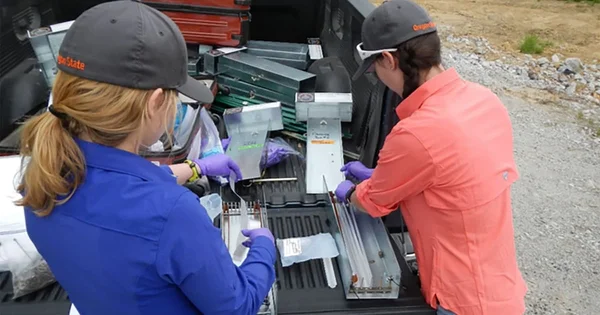 Research laboratory
Environmental Health Literacy and Translation Lab
The Environmental Health Literacy and Translation Lab evaluates the role of environmental health literacy in helping communities better frame and respond to environmental health hazards. Current projects incorporate disaster research, asthma and air pollution, and Indigenous environmental health.