

Research Signature Areas
Health Promotion and Disease Prevention
We believe that health is a human right, essential to the ability of individuals to function and flourish in society.
Cancer, heart disease, diabetes, dementia, mental health, and substance use disorders are leading causes of death and disability in the United States.
As populations age, acute and chronic diseases create social, medical, and economic burdens.
In addition, racial and ethnic minoritized groups are at disproportionate risk of experiencing negative health outcomes from preventable and treatable conditions.
College of Health faculty expertise contributes to all three levels of disease prevention.
Many focus on primary prevention to avoid the occurrence of disease or injury.
Faculty address the impact of social and economic determinants of health (e.g., work-family policies, health care reforms, behavioral and mental health services, school physical education policies) and promote healthy and safe behaviors (e.g., nutritious eating, physical activity, cancer screenings, smoking and substance use cessation, vaccine uptake).
Others focus on secondary and tertiary prevention to reduce the progression and effects of disease and injury and to manage health problems and injuries (e.g., osteoporosis, fall prevention, cognitive decline and dementia, cardiovascular diseases, diabetes).
Faculty are uniquely positioned to integrate environmental and biological information with social, policy, and behavioral data to promote health, prevent disease, and improve quality of life and life expectancy.
News and stories
Recent health promotion and disease prevention news and stories.

Veronica Irvin, an OSU Public Health associate professor and OpEd Project fellow, co-authored a MedPage Today op-ed cautioning that requiring only one trial for FDA drug approval undermines both safety and efficiency.

College of Health researchers published two studies on community-based HIV self-testing programs in Translational Behavioral Medicine.
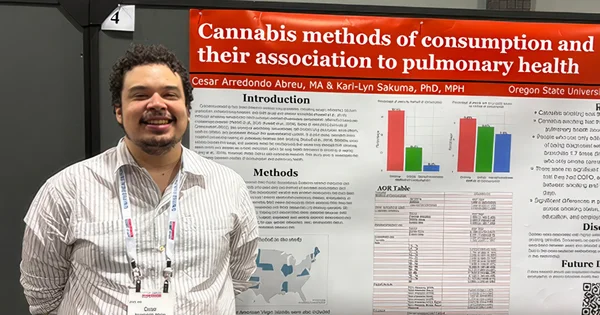
Doctoral student Cesar Alberto Arredondo Abreu was featured on the APHA Newswire for his research on cannabis edibles, presented at the 2025 APHA Annual Meeting.

College of Health researchers received a competitive NIH-funded pilot grant to study how healthcare providers engage older Asian adults with memory challenges in physical activity conversations.

Ashley McKelvey switched from nursing to nutrition research at OSU. Learn how her work on preterm infant digestion and human milk peptides impacts infant health.
-
Associate Professor Veronica Irvin discusses her behavioral science research at Oregon State University, including breast cancer screening, environmental health, well water safety, and supporting underserved communities.
Recent publications
Recent health promotion and disease prevention publications
(This is not an exhaustive list. Visit individual faculty profiles for more extensive lists of their publications.)
2026
2025
Projects, programs and laboratories
Health promotion and disease prevention projects, programs and laboratories.
(This is not an exhaustive list. Contact individual faculty for more information of their current and past research.)
 Research program
Health and Healthcare Outcomes Research Program
The Health and Healthcare Outcomes Research Program carries out research related to evaluation and innovation in health care to improve health outcomes (i.e., access, quality of life, satisfaction, health related social needs, costs) for people with specific chronic conditions. Current projects examine the uptake and outcomes of care coordination services and impacts of the pandemic on health care use and health related social needs.
 Research project
Health Care Workforce Needs Assessment
This project provides insights into health care workforce needs in communities across Oregon as well as general guidance on how to expand and diversify the health care workforce to meet the needs of patients and communities throughout Oregon and eliminate health inequities.
Towards this end, the project develops a biennial Health Care Workforce Needs Assessment that informs Oregon’s efforts to ensure culturally and linguistically responsive care for all.
PI: Tao Li, MD, PhD
Website: Health Care Workforce Needs Assessment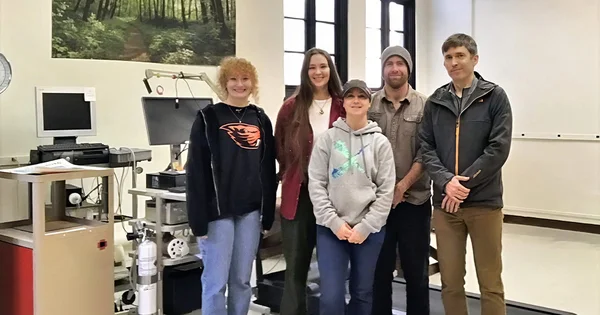 Research laboratory
Human Performance Laboratory
The OSU Human Performance Lab has research interests involving (1) the translation of laboratory tests of human performance to the field, (2) quantitative models of training load to optimize adaptation and minimize illness/injury, and (3) the physiology of pacing strategy in multisport athletes.
The Lab also provides tests of aerobic fitness (maximal oxygen consumption), resting metabolic rate, and body composition (percent body fat) for a fee.
Director: Jay Penry, PhD
Website: Oregon State University Human Performance Laboratory
 Research project
Impact of Innovative Health Care Policies on Abortion Access for Oregon Women Enrolled in Medicaid
Utilizing Oregon Medicaid claims and eligibility data from 2008-2016, this study will: 1) describe Oregon abortion rates among women of reproductive age enrolled in Medicaid; 2) compare abortion rates in Oregon before and after the implementation of Coordinated Care Organizations; and 3) investigate how abortion rates in Oregon were affected by Medicaid expansion under the Affordable Care Act (ACA).
PI: S. Marie Harvey, DrPH, MPH
Co-I: Lisa P. Oakley, Ph.D., MPH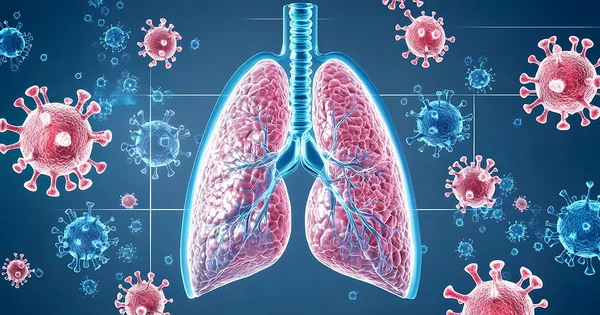 Research project
Lung cancer epidemiology study
Our research aims to identify nutritional and other modifiable factors for lung cancer prevention and survival using large-scale longitudinal observational study data or medical record data. Current projects focus on a variety of nutritional factors and statin use.
 Research project
Medicaid Expansion in Oregon: Access and Health Outcomes for Women and Infants
This CDC funded project examines the impact of both the implementation of Coordinated Care Organizations (CCOs) and Medicaid expansion on the use of health services and health outcomes among low-income Oregon women of reproductive age (15-44 years) and their infants.