


Innovation, solutions and impact
Shaping the next era of research in the College of Health
Health for All begins with research
Health for All begins with research, and research begins with curiosity — and questions. What impacts our health and well-being? How might we mitigate negative impacts? What do we understand, and what do we have yet to learn?
These research questions eventually lead to big ideas and big solutions that promote the public good, positively contribute to our economy, create reliable knowledge, help us make sense of our world and make better decisions, drive progress and personal development, verify facts, advance our society, improve the quality of our lives, and power innovation.
It’s also core to training future scientists, health providers and educators.
What research gets done, how it’s done, and who pays for it also pose big questions. In response, a new picture of research is developing across the college, driven by multilayered and complex factors.
On the one hand is new leadership, including a new dean and new associate dean for research, as well as a new college strategic plan.
On the other hand are significant federal funding cuts to Medicaid, environmental protections, grants, education and the college’s Extension Family and Community Health program. The loss of $9.5 million from Supplemental Nutrition Assistance Program education (SNAP-Ed) is about three quarters of FCH’s annual operating budget.
Layer on growing societal needs, such as tackling climate-related impacts, and this plethora of change and challenges demands that leaders sharpen their focus to create a strategic, diversified approach that prioritizes translating research into real-world impact.
“We’ve been doing this work, but now we need to accelerate, be more purposeful and make sure our science benefits those in greatest need,” says Professor Perry Hystad, who began his role as associate dean for research in September 2025. Marie Harvey, OSU Distinguished Professor of Public Health, most recently held that position and has been honored with the 2025 Discovery Award from the Medical Research Foundation.
Perry brings a distinguished record of interdisciplinary research to the role, paired with extensive leadership experience. With over $23 million in research funding and more than 160 peer-reviewed publications, his research strengthens the college’s and university’s strategic research priorities, particularly climate science and environmental impacts on human health.
He also has built strong partnerships with global and local agencies to translate science into meaningful policy and health outcomes.
He frames his vision for college research in three words:
Innovation
Expanding interdisciplinary research and embracing data science, AI, and novel methodologies to tackle pressing health challenges.
Solutions
Ensuring discoveries lead to evidence-based interventions, policies and practices that improve lives.
Impact
Accelerating translation so that individuals, families and communities, particularly those most in need, directly benefit from college research.
“This is an extremely important time for research in our college,” Perry says. “Our research has never been more vital — whether we’re addressing health inequities in Oregon, preparing for climate-related challenges, or harnessing new technologies to improve health. Over the next decade, we need to be more intentional, integrated and impactful.”
Research goals
Following is a Q&A with Perry on research goals, how college research complements the university’s strategic plan, Prosperity Widely Shared, and more.
How will the college reach its $40 million goal for research expenditures by 2030?
Research expenditures last year totaled $33.6 million, though the loss of several federal contracts and grants will create a large, short-term dip.
Currently, about 58% of our funding comes from federal sources, so reaching $40 million by 2030 will require us to diversify. To do this, we will expand engagement with foundations, philanthropic partners and industry, in addition to sustaining our strong federal portfolio.
The college’s diverse research strengths are attractive to these funding sources and deliver a clear return on investment: Healthier individuals, children, families and communities.
This goal is ambitious but achievable.
How does the college help advance the university’s research goals?
Our multidisciplinary research contributes to the university’s goal of building international research distinction in areas of competitive advantage, particularly climate science and related solutions, and integrated health and biotechnology.
Integrated health is about seeing health not in silos, but as the product of the complex interactions of biology, behavior, environment and community.
The college is uniquely positioned to lead and anchor OSU’s research in this area. Our faculty already exemplify this approach.
Across human development and family sciences, nutrition, kinesiology, and public health, we span the full continuum — from molecular and nutritional sciences to human behavior and movement, and from epidemiology and AI to OSU Extension partnerships and policy translation.
This breadth allows us to generate new discoveries and ensure they are implemented in ways that reduce disparities and improve health for people throughout Oregon and beyond.
What makes college of health research special at Oregon State?
What sets our research apart is its direct connection to people’s lives.
Whether it’s studying how wildfire smoke affects asthma, how nutrition can help prevent chronic disease, or how social policies shape family well-being, our discoveries can improve health and well-being for all people.
The college also houses four centers that fuel its strategic research engine.
We’re looking forward to celebrating the 15-year anniversaries of the Hallie E. Ford Center for Healthy Children and Families and the Moore Family Center for Whole Grain Foods, Nutrition and Preventive Health in 2026.
The Center for Healthy Aging Research celebrated its 20th anniversary in 2025, and the Center for Global Health celebrated 10 years in 2024.
What are some ways AI is being used in health research?
Artificial intelligence is an area we must embrace to increase our research productivity and ensure that we train the next generation of scientists.
In the college, faculty and students are already using AI to model environmental exposures such as noise, air pollution and greenspace; analyze social media to track health misinformation and its spread; and mine large health datasets to uncover new patterns and opportunities for prevention.
With the new Huang Collaborative Innovation Complex supercomputer, we have a powerful resource that will allow us to scale these efforts for even greater impact.
Importantly, the fields of AI and data science are evolving at an extraordinary pace.
Our priority is to equip faculty and students with the skills to harness these tools, effectively and responsibly, while positioning the college as a leader in applying AI to advance health and well-being.
Describe the current research landscape and what gives you hope for the future.
Even with significant funding uncertainty at the federal level, the research community is coming together to form new collaborations, share resources and find creative ways to keep research moving forward.
I’m also encouraged by the foundations, donors and industry partners who are stepping up to support our work.
At OSU, we’re fortunate to be at a world-class public research university where research is central to our mission. This provides protected time and space for faculty to pursue consequential science.
These commitments matter now more than ever.
They allow faculty to keep asking hard questions, mentor students and solve pressing problems even when external funding isn’t available.
Follow our research on Bluesky.
Research driven by health and well-being for all and prosperity widely shared
One of the college’s goals in its strategic plan, Health + Well-Being for All, is to generate innovative discoveries primarily driven by three strategic areas of expertise:
- Environmental impacts on human health
- Health promotion and disease prevention
- Health and well-being of youth.
Below are examples of each.

Environmental impacts on human health
Predicting noise levels using AI
Assistant Professor Matthew Bozigar collaborated with students to study the health impacts of urban noise in Portland to inform public health policies and strategies. By designing a new deep learning model, they are able to predict noise levels throughout the city.

Health promotion and disease prevention
Designing inclusive cancer care
Led by Associate Professor Jessica Gorman, COH researchers are partnering with younger adults, LGBTQ+ people and rural residents to improve cancer care and support. By listening to lived experiences and building trust, the team designs inclusive programs that address real-life barriers and help survivors heal and thrive after treatment.

Health and well-being of children and youth
Protecting children from harmful exposures
Professors Molly Kile and Megan McClelland lead the ASPIRE Center, a children’s environmental health center that works to reduce harmful environmental exposures impacting children and translate key health research findings to relevant stakeholders.
Related stories

Think your social media connections are keeping loneliness at bay? A first-of-its-kind OSU College of Health study says they're more likely doing the opposite.
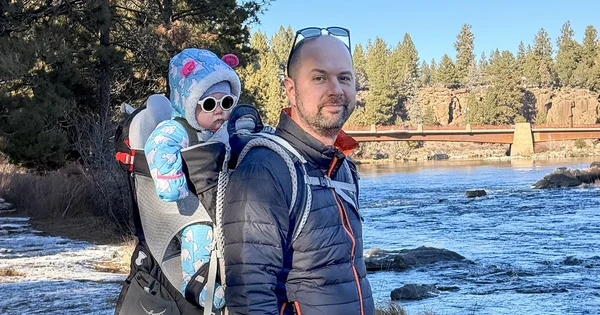
Environmental epidemiologist Matthew Bozigar discusses the impact of geography on health outcomes, the risks of chronic noise exposure, and his research at Oregon State University.

OSU's Center for Healthy Aging Research connects 40+ faculty across eight colleges to advance interdisciplinary science — from lab bench to clinical practice — helping people age healthier at every stage of life.