

News and Stories
Environmental and Occupational Health
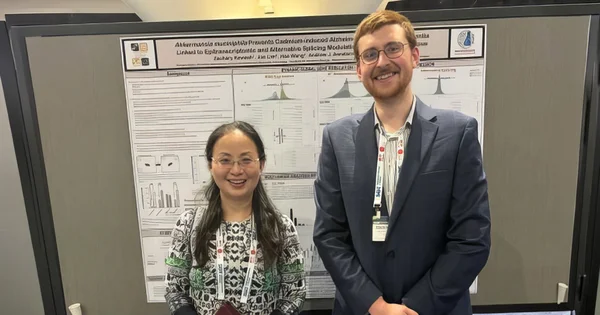
MPH environmental and occupational health student Zach Kowash presented research on cadmium-induced molecular mechanisms linked to Alzheimer’s disease at the Society of Toxicology conference, exemplifying the interdisciplinary strength of the EOH program.

Environmental epidemiologist Matthew Bozigar discusses the impact of geography on health outcomes, the risks of chronic noise exposure, and his research at Oregon State University.
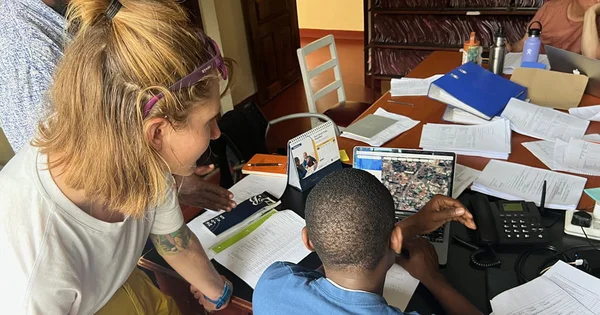
Public Health PhD student Madalyn Nones researches climate disaster resilience, focusing on drought impacts. Learn how she's helping communities adapt worldwide.

The College of Health at Oregon State University is accelerating research innovation with a strategic focus on interdisciplinary collaboration, AI applications, and translating discoveries into real-world health solutions that benefit communities most in need.

$3.8M NIH study uses AI monitors to map pollen and mold exposure, helping predict COPD flare-ups and improve care for millions living with lung disease.

Their participation highlights the College of Health’s national leadership in research translation and its ongoing commitment to improving health outcomes for children and families. The ASPIRE Center exemplifies how collaborative, cross-disciplinary research can generate innovative, evidence-based solutions to protect children and promote healthy families and communities.

This recognition follows her receipt of funding from the Consulate General of the State of Kuwait, Kuwait Cultural Office in Los Angeles. The fellowship will support Mariam as she finalizes her research and prepares to defend her dissertation.

First U.S. study of its kind by OSU researchers finds Portland noise exceeds EPA and WHO guidelines, with loudest areas affecting low-income and non-white neighborhoods disproportionately.

This recognition places him among the top 0.5% of scholars worldwide based on publication record, impact and the quality of his scholarly contributions across fields and disciplines.

Professor Molly Kile contributed to a Global News story about inorganic arsenic in rice. Rice has a unique ability to absorb arsenic, but Molly says harm is determined by how much and for how long someone has been exposed to the toxic chemical.

On March 4, undergraduate and graduate students from Oregon State University's College of Health and College of Engineering attended the prestigious Oregon Governor’s Occupational Safety and Health (GOSH) conference at the Oregon Convention Center in Portland. Held biennially, GOSH is the largest occupational safety and health conference in the Pacific Northwest, drawing professionals and students alike.

Laurel discussed how the FLIPP for Lifejackets program, in partnership with coastal communities, provides fishermen with resources to protect their lives and livelihoods.