

What is nutrition?
What is nutrition?
Nutrition is the study of how food and nutrients fuel your body and shape everyday life — your energy, focus, mood and long‑term health.
It looks at what we eat, why we eat it and how food choices connect to well‑being at home, in school and in the community.
What do you study in nutrition?
As a nutrition major, you learn how food works in real life. Classes connect science to daily choices so you can understand how meals, snacks and habits add up over time.
You’ll explore topics such as:
- How your body uses carbs, fats, protein, vitamins and minerals to power activity and thinking
- Reading labels, portions and ingredient lists to make informed, affordable choices
- How culture, family and community shape what we eat
- Food and energy for school, sports and busy schedules
- Meal planning basics, budgeting and cooking foundations
- How nutrition connects to health across the lifespan, from childhood to older adulthood
- Public messages about food and how to sort facts from trends
- Intro research skills and how evidence guides everyday nutrition advice

Is nutrition a good major for me?
You might like majoring in nutrition if you:
- Enjoy helping people and explaining ideas in simple, practical ways
- Want classes that connect science to everyday life, meals and budgets
- Are curious about how food affects energy, focus, sports and mood
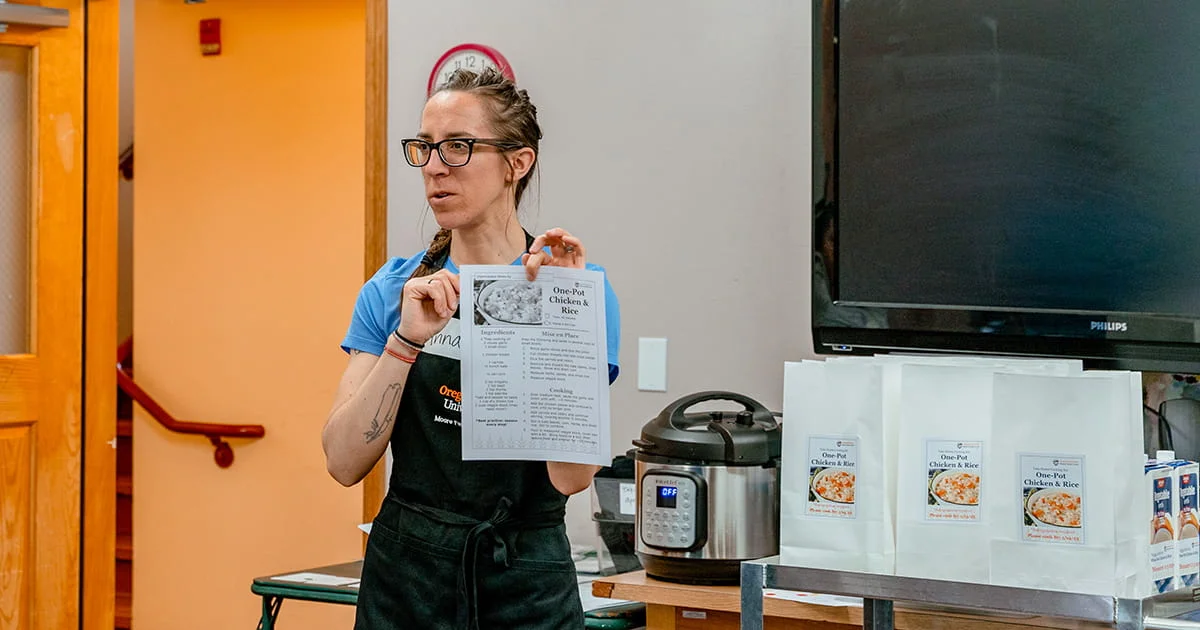
- Like hands‑on learning — planning, prepping, testing or teaching
- Care about community well‑being and access to healthy, affordable food
- Are open to careers that support people across many ages and settings
What can you do with a nutrition degree?
A nutrition degree prepares you to help people and communities make informed food choices. Graduates use nutrition knowledge in places such as schools, community organizations, health and wellness programs, food systems and communications.
Some students continue to graduate study or professional training in areas such as dietetics, nutrition research, public health or health education.
For detailed job titles, employer examples and typical settings, explore nutrition career pathways.
Ready to learn more about studying nutrition at Oregon State?
At Oregon State, you’ll learn from faculty who connect nutrition science with real life. You’ll build practical skills you can use right away — on campus, at internships and in your community.

Nutrition undergrad program
Explore the nutrition undergraduate program.

Nutrition careers
Explore nutrition careers.

Nutrition courses
View nutrition courses.
Frequently asked questions about nutrition
Is nutrition a science?
Yes. Nutrition uses biology and chemistry to explain how nutrients support growth, energy and health, then applies that knowledge to real-life food choices.
Do I need graduate school to work in nutrition?
Many roles that use nutrition knowledge are open with a bachelor’s degree. Some specialized paths— such as becoming a registered dietitian — require graduate education and supervised practice. Talk to a career advisor to explore what's right for you.
Is nutrition only about “healthy” eating?
No. Nutrition looks at the full picture — culture, budget, access, taste and goals — then helps people make choices that fit their lives.
What kinds of classes will I take?
Expect classes that cover nutrients and the body, food and culture, label reading and communication, plus applied learning like planning and basic cooking skills. For up‑to‑date courses, see the nutrition courses webpage.
Can I combine nutrition with sports or public health interests?
Yes. Nutrition connects well with physical activity, well-being and community health. Connect with an advisor about options.