
Meet the Simulator of the Human Intestinal Microbial Ecosystem (SHIME)
Discover how the SHIME (Simulator of the Human Intestinal Microbial Ecosystem) allows scientists to study digestion and gut health outside the human bod
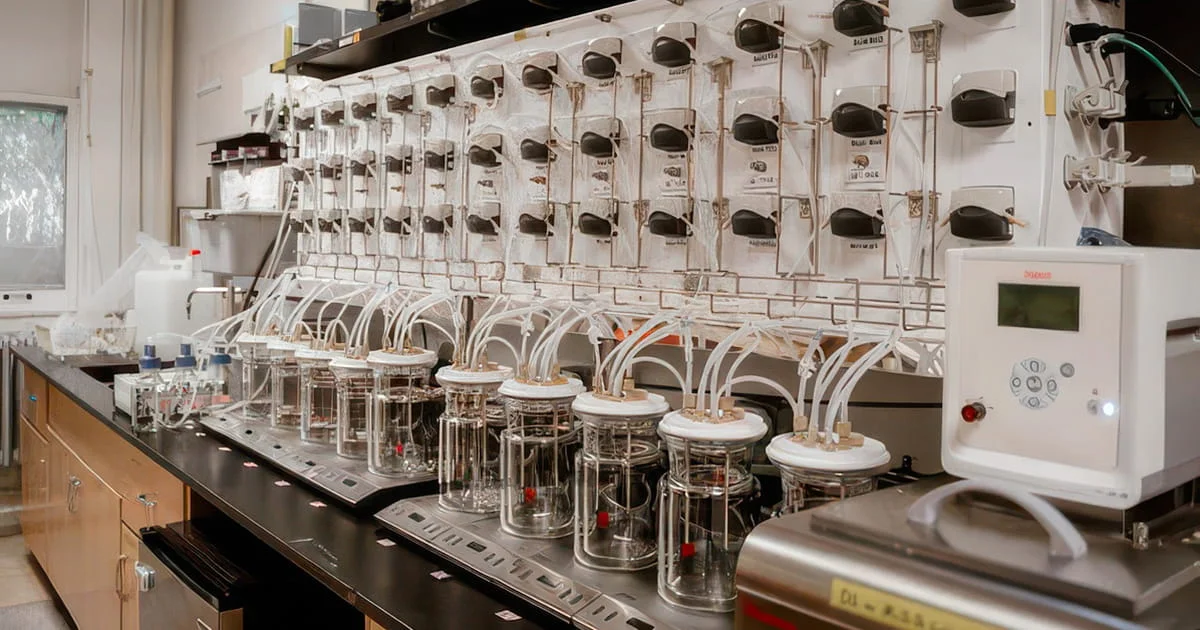
“The SHIME” is a phrase we hear often here at the Moore Family Center and the Dallas Lab, and with good reason: the Simulator of the Human Intestinal Microbial Ecosystem (SHIME) is a remarkable piece of equipment. It gives scientists the ability to study human digestion in the lab, outside of an actual human.
So how does this science fiction-sounding machine work? Envision a series of glass containers connected to each other with numerous pumps and tubing. The containers represent different sections of the digestive tract. When you “feed” something to the SHIME, the contents are pumped to different containers that represent different sections of the digestive system. For example, there is a container that mimics the unique environment of the stomach, the small intestine, and the large intestine. Like a human’s gut, the SHIME’s “large intestine” containers are where the gut microbiome, with loads of beneficial bacteria, is most active.
With special care, such as keeping containers oxygen-free, and adding correct enzymes, scientists can grow and maintain a gut microbiome within the SHIME that is equivalent to our own.
Researchers can use the SHIME to study different foods and explore how they break down, release nutrients, and affect the gut microbiome.Presently, researchers in the Dallas lab are using the SHIME to discover differences in milk digestion between preterm infants and infants born at term.
In summary, the SHIME opens up the “black box” of digestion, empowering researchers to study how foods behave after we eat them, a promising approach for increasing gut health through better nutrition.
Related stories
Ashley McKelvey switched from nursing to nutrition research at OSU. Learn how her work on preterm infant digestion and human milk peptides impacts infant health.
The SHIME simulates human digestion in the lab, helping researchers study how foods break down, release nutrients, and affect gut bacteria. Learn how this remarkable technology is advancing nutrition science.
Moore Family Center launches Nutrition Career Mentorship Program for 2025-26, pairing students with nutrition professionals. Apply as mentor or mentee today.