

New dean gets a running start
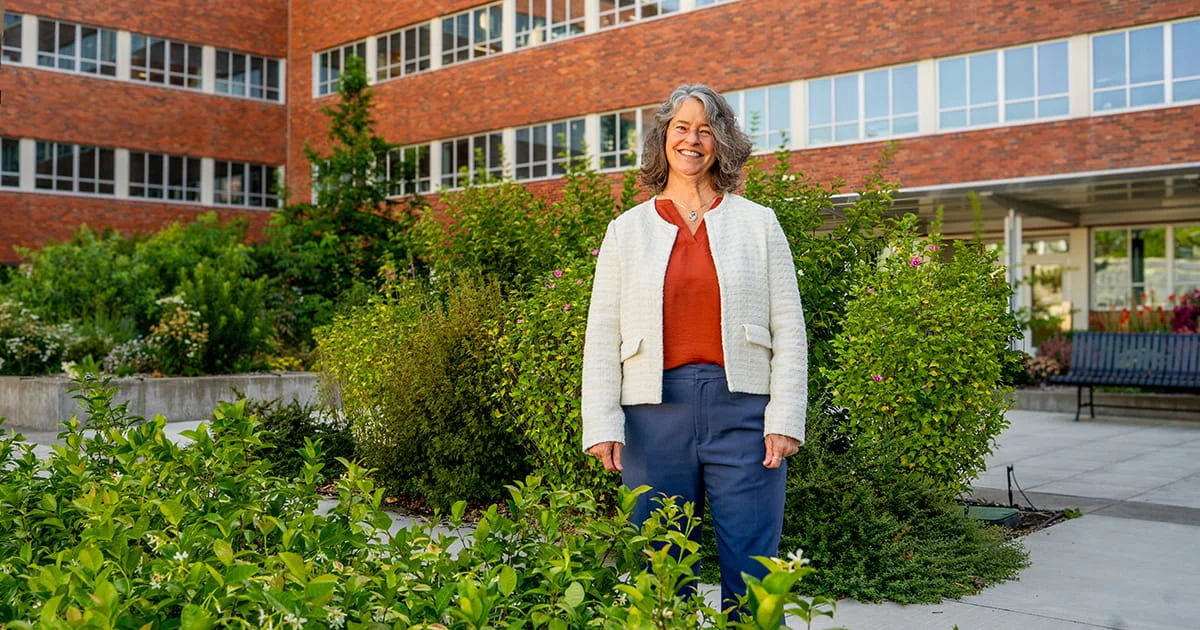
Dean Debbie Craig, PhD, AT-R, becomes the 11th college dean, bringing athletic training expertise to tackle financial challenges and drive positive change
As the eleventh person to be named dean of the college since its founding in 1889, Debbie Craig, PhD, AT-R, joins a long line, nine to be exact, of women holding the title. (Does not include interim deans. Refer to our full list of college deans.)
From Margaret Comstock Snell and Ava Milam Clark to Kinsey Green and Tammy Bray, the list is impressive, and each left their mark. Debbie hopes her own legacy will be to “right the ship.”
Uniquely poised as the college’s first dean-slash-athletic-trainer, she has begun to tackle financial issues and improve efficiency using an approach that derives from her AT training: Diagnose a problem, break it down, and know your team and their skills.
“People not only have different learning styles, but also different intelligences,” she says. “It’s important to listen so that you get to know someone and how their brain organizes ideas, and how they see and work through problems. Doing so helps me be a better leader and support those I'm leading. The more varied the talent is in your team, the better your team.”
Like the women deans who came before her, and especially in the male-dominated field of athletic training, Debbie learned early on that confidence is key.
“Because I am a woman, self-confidence is imperative to be successful,” she says. “If not, I'd get eaten alive. I've needed to be strong from the get-go, and that has served me well.”
Throughout her career, she’s learned to appreciate the responsibility she has for others and the whole organization; thoroughly assess situations; be decisive and transparent; respect others and the culture; stay calm in difficult situations; create buy-in; be confident in the strength of her team; expect the unexpected; and most importantly, be kind. In Alaska, Debbie became known for asking for kindness during challenging times and recognizing that everyone's doing their best.
“So many people were appreciative of that, and being kind is one thing I hope people feel from me.”
In Debbie’s world, strength doesn’t equal force, actions speak louder than words, and respect is earned, including her own.
“Respect shouldn’t come from my title. It’s something you earn. I hope people feel that there is a sense of respect flowing in both directions in every conversation.”
Look, Listen, Feel
If you’ve ever been through CPR training, you know that when you first get to a scene you look, listen and feel to assess the situation.
“I'm kind of doing that right now,” Debbie says. “I'm on a really steep learning curve in terms of cultures and programs. It's easy to come in and see the structure of the college you're going to lead. It's a different thing to understand the culture of each nuanced program.”
In addition, she’s focusing on efficiency, challenging historical ways of doing things, and working to implement the strategic plan and identify ways to measure its success.
“We have a great plan that’s been approved and published. And now the leadership team is rolling up its sleeves to get it organized in an actionable way. The plan is well thought out, and I think it’s really in lockstep with Prosperity Widely Shared, so I'm excited about that cohesion.”
Also making her job easier is the people who surround her, who make her optimistic for the future.
“The quality of the faculty and staff here is amazing, and our leadership team has been incredibly helpful in getting me oriented and engaged in some decision-making conversations. They're really talented, and they bring different talents to the team, so I'm very excited. I think with this leadership team and the level of understanding of where our challenges are we're getting off to a running start already with being able to make some positive changes.”
Change is one thing the college is well-versed in managing, and Debbie acknowledges that leadership and structural changes, in addition to financial challenges and curriculum and program changes, create a need for long-term stability.
“I really hope to be here in a calming, kind sense while helping the college get to a stable, fiscally sustainable, modern place. I think it's completely doable, and I think we've got the right people to do it — people who are ready to do it. It's hard to do, but I’m absolutely convinced we'll get there.”
Related stories
OSU has been designated a NIOSH Total Worker Health® Center of Excellence, joining an elite network of institutions advancing integrated approaches to worker well-being and safety.
Debbie Craig, PhD, AT-R, joins as the college's 11th dean and first leader with an athletic training background. Drawing on her AT expertise, she's tackling financial challenges and improving efficiency while emphasizing kindness, team diversity, and long-term stability.
From innovative Core Education courses like Disease Detectives and Food and Culture to new online degrees in healthcare administration and human services, the college is meeting modern student needs.